
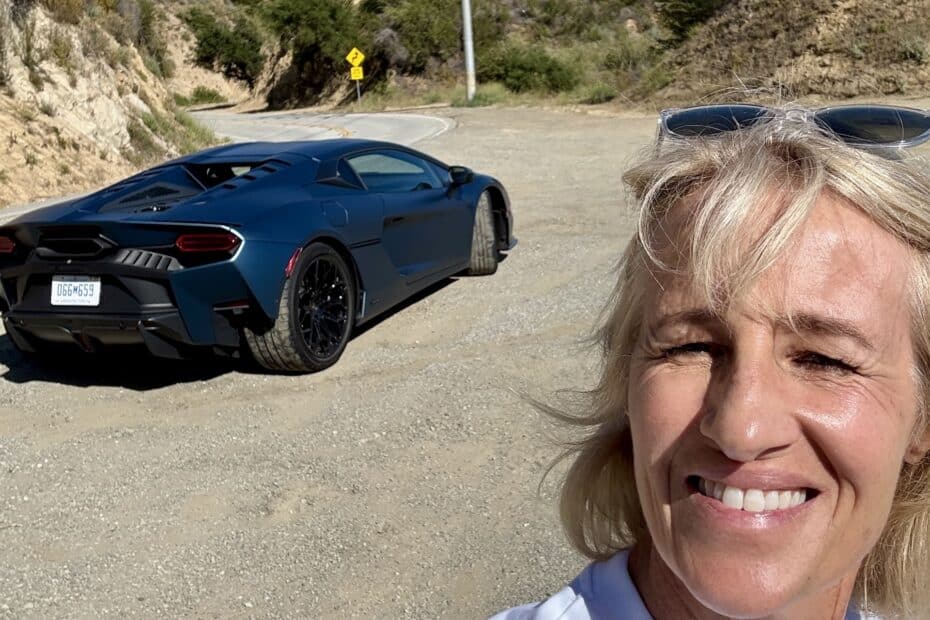
Driving through the Whole Foods parking lot in a brand new Lamborghini Temerario, I expected some attention. But this is LA, baby, and Malibu at that, so what happened after I parked was nothing less than wild. Every single person under 25 turned around, opened their phone, and started capturing me like I was Kim K. This awkward moment left me with two thoughts:
- They didn’t do that when I drove an Aston or a vintage Ferrari.
- I really should’ve put on some makeup.
One of the advantages of my chosen career is that I get to drive fancy cars. I drive cars that make people ask, “How’d you like it?” and “How do I get your job?” But driving the Lamborghini Temerario sparked something entirely different and somewhat unexpected– undeniable engagement from a generation that’s supposed to be uninterested in cars. The whispers were a dead giveaway:
“Wow, look at that!”
“Is that hers?’
“That’s the Temerario, right?”
“Yeah… It’s sick.”
“Hella sick.”
Driving away, I gave the crowd a small rev (duh); then I had to pull over because my mind was flooded with one thought: “Wow, Lamborghini really nailed it.”
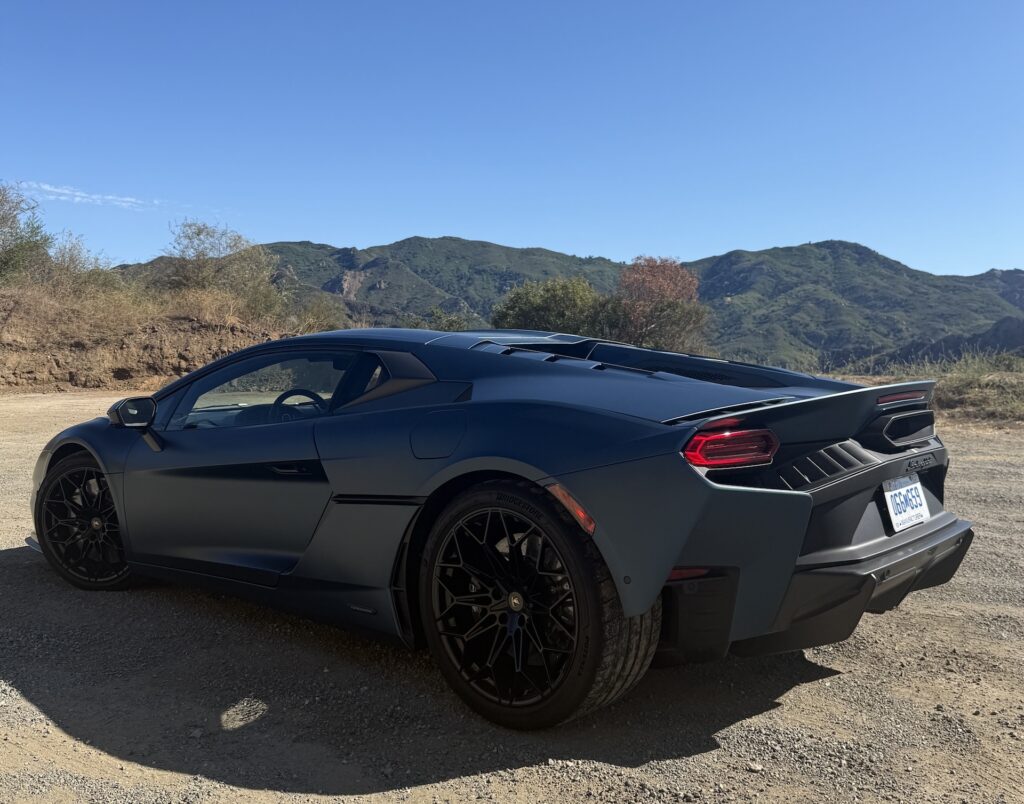
While I really want to tell you more about the Temerario, its phenomenal handling, how it cornered on a dime, how the acceleration was simultaneously face-melting and fear-inducing. How the electric mode was so lovely and calm, like a sorbet in between mouth-burning courses. But you can see all of that in my video:
What is more important is that the Temerario made me understand something very simple:
Lamborghini is Gen Z’s 911. Hear me out.
Gen X: The Porsche Poster Effect
The year was 1986, and I was visiting my friend Karen’s house for the first time. Walking into her bedroom, I saw all the hallmarks of a 1980s teen girl—Laura Ashley bedding, a Rubik’s Cube on the bedside table, and on her bookshelf, well-worn copies of Judy Blume and The Preppy Handbook. Next, what caught my attention was what hung on her wall. Next to the Adam Ant poster was a simple print of a red Porsche 911 sitting dramatically against a black background.
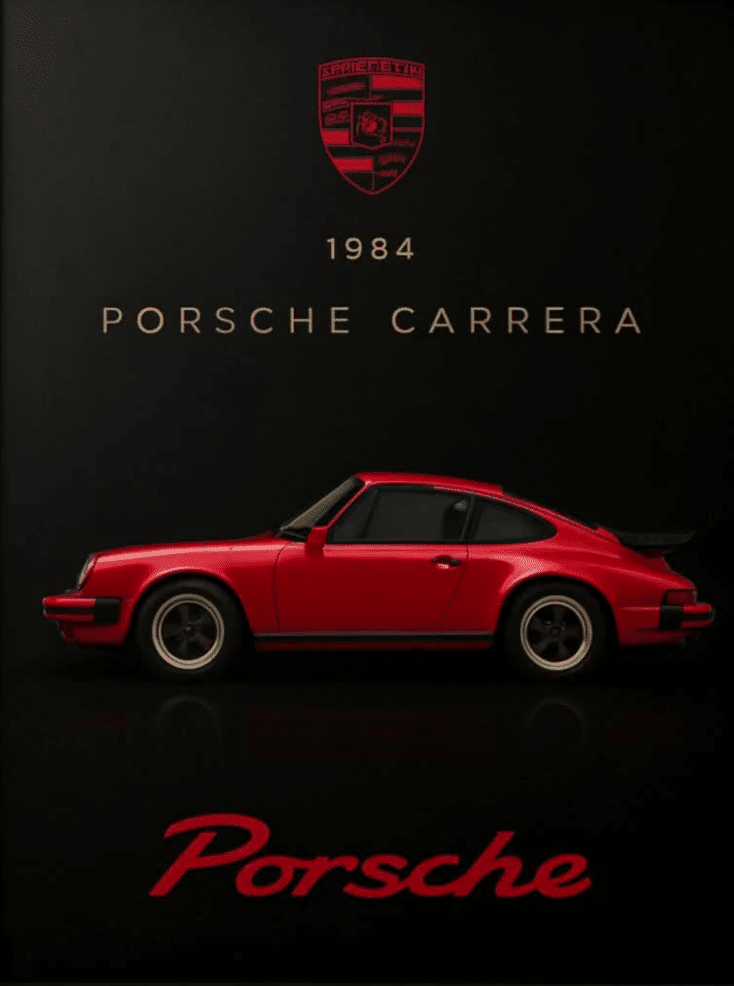
I remember pointing it out and saying something deep and meaningful like, “Nice poster.” She replied with a simple, “Yeah, I’m gonna get one someday.” Knowing Karen, she absolutely did. At the time, I didn’t think twice about our conversation. But in hindsight, it was remarkable. Two girls talking about a car in shorthand—not about its 0-60 time, its design, or even its sticker price. We were discussing the fact that driving a 911 would equal success. It was so real that it required no discussion.
Porsche’s Aspirational Empire
Karen’s dream was not accidental. Porsche’s marketing team worked hard to cement itself into the consciousness of the ‘Greed Is Good’ generation. It was the car the dream boy drove in Sixteen Candles, the bad guy had one in Scarface, and when Tom Cruise said in Risky Business, “Porsche, there is no substitute,” my generation believed him– even if we couldn’t drive!
My daughters’ generation (Gen Z) is more complicated. They’re maturing at the intersection of so many disruptive acronyms: COVID, EV, AI, MAGA. Their world is the multiverse—social media and video games— where things aren’t always perfect and what happens is largely under your control. And in this wild, new, ever-changing landscape, the automotive crown jewel is Lamborghini.
Enter The Lambo
Here’s an understatement for the ages: The media landscape has changed since the millennium. Hollywood lost its grip. Algorithms, gaming, YouTube, and creators became the new gatekeepers of aspiration. Just as this was taking shape, Lamborghini was sharpening its design language to be more angular, sexier, and in many cases, downright furocious. In 2001, the Murciélago, Lamborghini’s first all-new model in 11 years, threw down the gauntlet, announcing Volkswagen Group’s ambitions for the storied brand.
Then, in 2011, Lamborghini ripped open its silk shirt, letting its chest hair blow in the breeze as sunlight bounced off of its chains and the gold raging bull medallion adorning the hood of the rolling orgasm that was and still is the Aventador. I remember precisely where I was (just before the McClure tunnel on the 10 westbound) and how I felt (hot and melty in the southern hemisphere) when I first saw that car. It was like seeing a gorgeous guy flexing his muscles on the beach– you don’t want to give him the satisfaction of your attention, but averting your eyes simply isn’t an option.
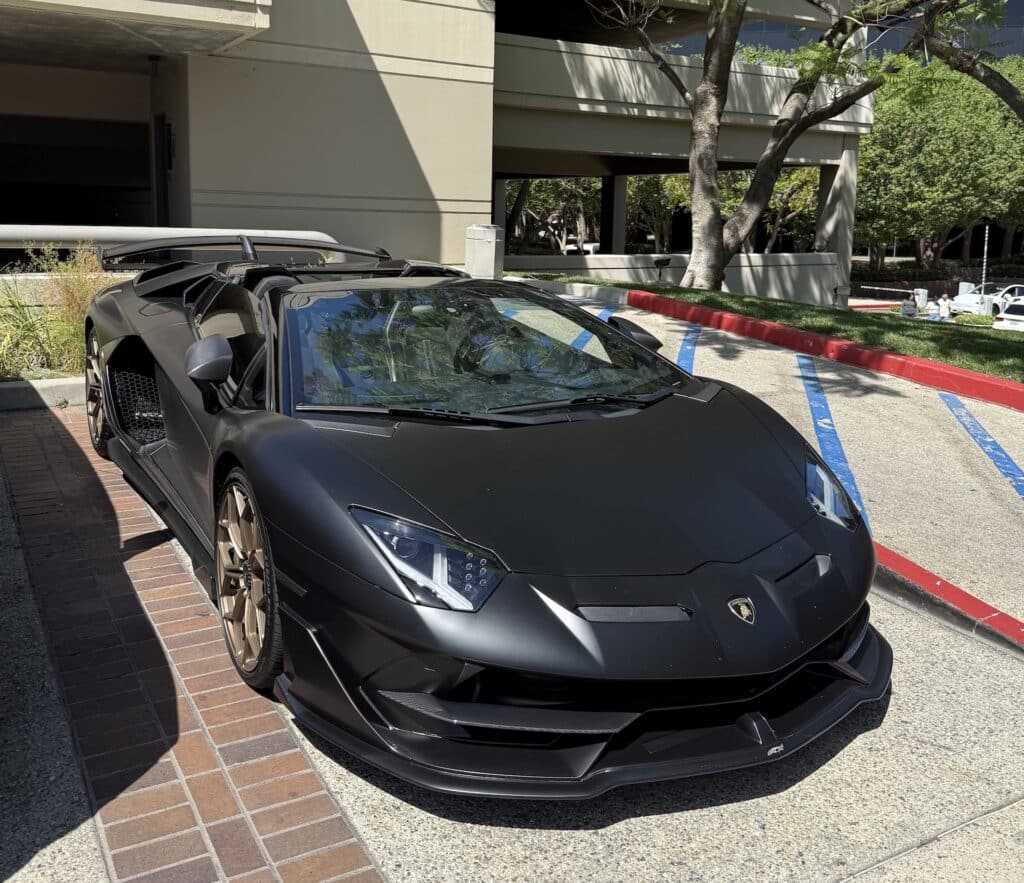
The hits kept coming– the Gallardo, the Huracan, and finally the dreaded Urus. Sure, as a supercar SUV, it’s an inherent contradiction in terms, but that doesn’t mean it isn’t absolutely gorgeous. The first time I saw that car (driving during the golden hour up Topanga Canyon from PCH), I shook my head in disbelief and said out loud, “No way. It’s spectacular.” It was and still is.
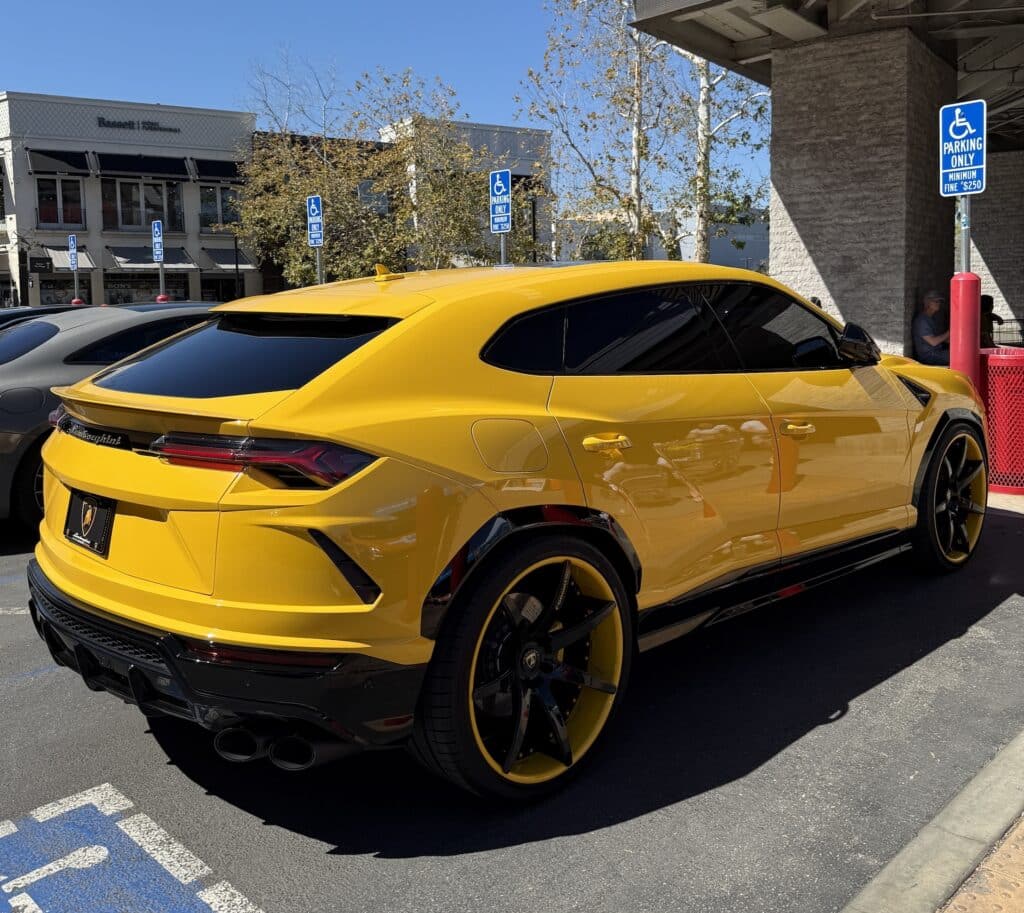
You can hate all of these cars. You can call them tacky, pretentious, and even obnoxious– you wouldn’t always be wrong. But it would be a mistake to underestimate how well these designs captured the imagination and aspirations of a generation. If you don’t believe me, consider the numbers.
Lamborghini’s Focus Is Digital First
Check out these stats:
- Lamborghini has over 36 million followers on Instagram. (Ferrari has 32 m and Porsche roughly 33m)
- Lamborghini was the first supercar brand to post on TikTok. Its first video got 3 million views.
- Microsoft chose one car to put on the cover of Forza Horizon 3: Lamborghini’s Centenario
- Ferrari spends over $450 million annually on F1 alone. Lamborghini doesn’t race in F1 and spends just under $50 million per year on motorsports, mainly Squadra Corse.
Yes, I understand that Ferrari makes twice as much revenue as Lamborghini, but this is about the long game. F1 fans can buy all the red hats, gloves, and tracksuits as they want, but they don’t spend a lot of time thinking they’ll wake up and be Sir Lewis Hamilton.
But when a gamer crosses the finish line in a Lamborghini, they aren’t observing the win; they are participating in it. This is inherently a different connection, one that starts earlier, doesn’t depend on a team’s performance, and one that could translate to more vehicle sales.
For decades, aspirational brands relied on spectatorship. We watched James Bond drive an Aston Martin or watched Andretti/Schumacher/Hamilton cross the finish line first in a Ferrari.
Today’s consumers don’t just watch brands. They interact with them. They race them, customize them, and share them. That’s a fundamentally different relationship.
So What’s Next For Lamborghini
After driving the Temerario, one thought still lingers with me: the future is Lamborghini’s to lose. Brands spend billions attempting to connect with the digital-first generation. Most enjoy a fleeting connection — success is measured in a year, maybe two, of popularity. To pull off what Lamborghini has done—repeatedly introducing vehicles that capture the hearts and souls of a fickle generation—is truly remarkable.
So, as cars continue to become commoditized and neutered by electrification, computerization, and soulless marketing (I’m talking to you, BMW/Spiderman), it’s nice to know that kids are still putting car posters on their walls. Even if that poster is a wallpaper download.